• My Thoughts on Film Festivals in 2012

    02/03/12

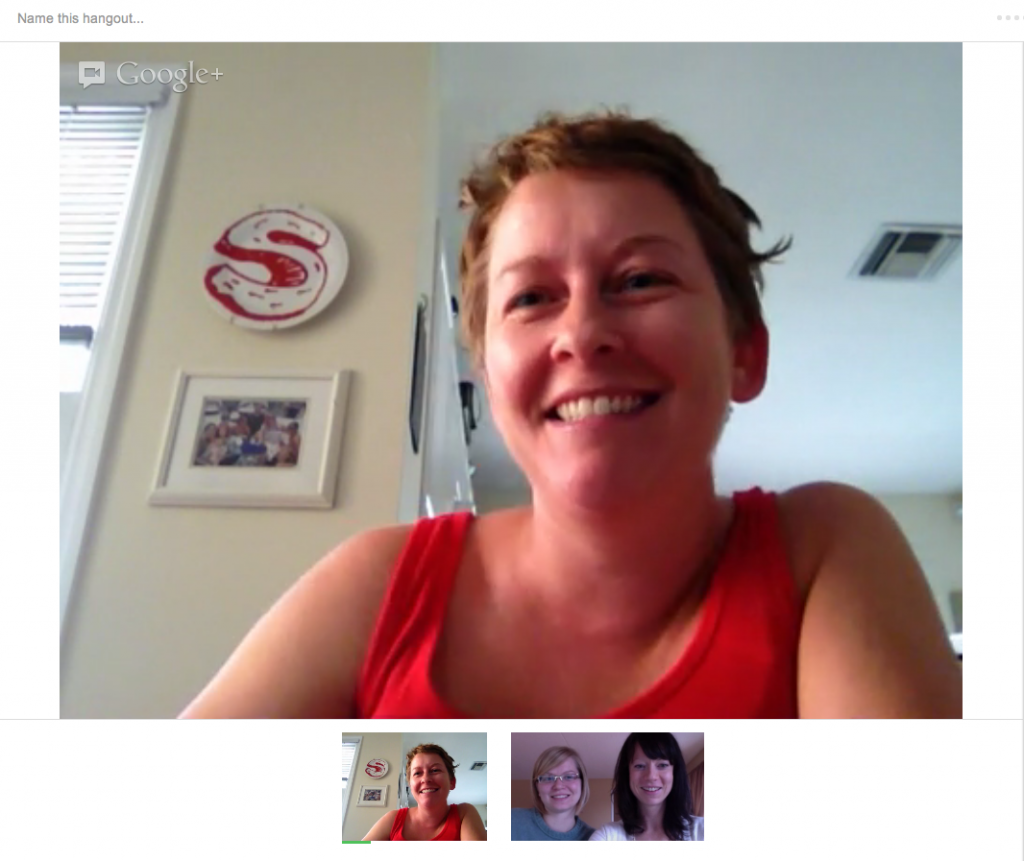
    20K Films' Owner, Laura Zinger, at the Landlocked Film Festival in Iowa where Proceed and Be Bold! was an official selection in 2010?

    Yesterday, I received an email from a Chicago Filmmaker asking me if I had any advice on how to go about entering their film into film festivals. Of course, my canned response was WithoutABox.com which makes entering your film into multiple festivals a snap as well as a drain on your checkbook, because festivals, of course, are money making ventures as much as anything else.

    But in all honestly, my initial inner response, was “Why?” In this day and age, with how many online distribution outlets are available to indie filmmakers, would anyone want to pay to enter their film into film festivals? Chances are you just spent a boatload of money making your film (unless you just used your iPhone 4 or 4S and recorded external audio which is my recommendation for any new and budding filmmakers out there reading this. Keep it cheap, Sister.)

    Not only do film festivals cost a lot of money to just enter your film (Do you know how pissed I was when I paid over $2,000 in festival fees for my first documentary feature and only got into a few of them? I could have made a great start on another indie film with those bills!), but it takes forever to find out if you got into any of them, then you have to wait around until the festival happens, and then you also in almost every case have to pay to fly out to the festival to represent your film. You’ll have to pay for your own hotel and food as well. I even had one festival contact me recently inviting me to enter my documentary into their film festival, then was shocked when I asked them to waive the fee (which is standard etiquette as far as I know when a festival INVITES you to submit to THEIR festival), then they agreed to waive the fee asking me to pay it if my film was accepted. Lame, but fine, because indie filmmakers have been trained to believe that the film festival is the be-all-to-end-all. So I started filling out the application, and then read that if you submit your film and your film is accepted into this film festival, you have to commit to attending the film festival including paying for yourself AND another crew member’s entire travel, lodging and food fees. This festival, which was only in its third year mind you, has this as a  REQUIREMENT for entering this film festival. I was horrified! Are only rich people making indie films? Am I a total oddball here in admitting that as a 32-year old filmmaker, I am completely and utterly devoid of any kind of savings account or IRA or 401K that I could possibly tap into in order to attend a film festival like this?!  I would rather spend the money on my next film.

    The only film festival at this point that I think is worthwhile in terms of paying to go to is Sundance, and that is only because it’s probably one of the last few, if only, American film festivals that where the films accepted into their festival have a chance at getting distribution. As a matter of fact, Sundance just announced that all films PAST and PRESENT will get online distribution by none other than Sundance itself. Read the article here.

    I’m probably a terrible person to write this article, because I am a little cynical about film festivals and honestly I have a bad attitude towards people who say oh, you HAVE to get into a film festival, or else no one will watch your film. I’m calling bullshit on that. There are all kinds of ways to get your films seen, and at this point, I have to agree with a great local indie filmmaker and friend I know, Ben Hicks, who recommends that until you build a name, you should put your films online for free.

    In fact, he insists that this is the only way for an unknown indie filmmaker in today’s world to get their films out there.  But I do want to add that I think this is great advice only for strictly narrative films. People will pay to watch Indie documentaries. It’s amazing to me how much money an indie doc can make, no matter how poorly or well it is made. If you make a doc about something where very few docs about it exist, you’re golden.

    But you can still part-time apply Ben’s freebie model, if you’re an indie doc maker by putting your indie doc up on SnagFilms.com for free for a limited time (i.e. one month) and then tell all of your friends and hope that word gets round. If there’s an audience for your doc, word will really get around if people can watch it for free, like it, and share it.

    So, in closing, my thoughts on film festivals in 2012 is to stop thinking about them, stop worrying about them, put them out of your head, and just go and make the film that you want to. Just focus your energy on making your film and getting it done. Then if you feel the need to waste large sums of money entering your film into film festivals, instead of just putting it online and finding some kind of online distribution outlet, do it after you finish your film. That’s my plan for 2012 at any rate. Happy filmmaking, folks.

    Laura at the SJWFF and some former SJWFF's staffers, Shannon and Aimee, and I am so sorry I don't know the woman's name to my left.

    Also, on an endnote, one of the best festivals I ever attended was the St. John’s International Women’s Film Festival.  It was amazing to meet a great group of female filmmakers in a great country! (oh, Canada) Really, the one great thing about festivals is the people that you meet, and this is also the festival where I met Ashley MacKenzie, who is one of Canada’s up and coming female filmmakers. Check out her short film, Rhonda’s Party.   It’s odd, but I rarely meet female filmmakers with an encyclopedic knowledge of films and filmmaking, but Ashley is one of them! (Correct me if  you think I’m wrong here, Ashley, but I was pretty impressed.). It’s really too bad that there seems to be so few women who have film knowledge like this, because the iconic filmmaker stereotype is always a male who has watched every single film ever made in America, Japan and Brazil. (I’m talking about you, Quentin Tarantino!) And I feel like if a female filmmaker hasn’t watched every single film ever made (because she might be, oh, just living her life instead of watching a million films) in America, Japan and Brazil, then she is instantly judged by male filmmakers and the snobby male movie watching scene as inadequate and how could this female filmmaker ever make great films if she’s never watched every French New Wave film no matter how obscure. Seriously, I am sick of this stereotype, because I am definitely not one of those rare women who are on top of their film knowledge, and if all I want to watch are Fellini films and Bladerunner then everyone can kiss my ass. But, going back to Ashley MacKenzie and her knowledge, it’s great to know that if anyone else brings up this unspoken issue that “women don’t really watch or understand true cinema,” I can just say, “You’ve got to meet, Ashley MacKenzie.” Sorry to put so much on you, Ashley!

    Ashley is part of a film company called Grass Fire Films. Their twitter feed is pretty awesome too.

  • The Very Real Complication of Independent Filmmaking

    02/02/12

    Funding. That’s it. That’s what I’ve narrowed down as the very real complication of being an independent filmmaker. Don’t agree? Then please tell me how you are able to hold down a job to pay your bills as well as make enough cash overflow to fund your next feature? Grants? Trust Fund? Parents? Friends? Bank loan? If you say yes to the last one, please tell me which bank is lending you any money for a film in this economy.

    I’m not the only one with funding on the mind. Edward Jay Epstein, the brilliant mind behind the book, Hollywood Economist: The Hidden Financial Reality Behind Movies  wrote a sobering article in early 2011 titled, Why Indie Movies Are an Endangered Species.  His blog post lays the groundwork for the dissolution of pre-sales funding for indie films by back-end distributors, because hold the phone, the decline of DVD sales in major retail box stores. Of course, the death of the DVD is inevitable and unstoppable, but did anyone else realize how important DVD sales were in the funding of indie films? I had no idea DVD sales played such a large role in giving cash on hand to distributors so they could help invest in future indie film productions. But forget my duh moment here, my main point is to illustrate that the traditional concepts of funding indie films are dying along with those DVD sales, and again we, indie filmmakers, are being faced with the very real complication of independent filmmaking: finding funding.

    So in light of this apocalyptic, post  pre-sales funding world that we live in, what other options are there for indie filmmakers to raise money to make their films? I realize that the most obvious one is a filmmaker’s own pocket, but if your pockets are that deep, you are not reading DIY FILM CHICAGO’s online magazine.

    The other options as far as I can tell right now are the following:

    1) Kickstarter

    2) Your family

    3) Shut up and Shoot on your cell phone

    4) Just record Audio (sounds weird, I know, but I’ll explain this more and include some nice examples in a further post)

    Let’s start with Kickstarter, I have to start out by saying that Kickstarter.com, based purely on their publicly available 2011 Stats  is amazing. The success rate for 27,086 launched projects was 46%. That means only 11,836 of those launched projects got funded. When you break down the funding on Kickstarter by category, and look specifically at Film & Video, the stats are astounding. Over $32 million dollars were raised for Film & Video ALONE.

    Check out all of that dough for film & video!!

    Granted this staggering amount of funding was spread out over 3,284 projects, but still what other major or indie film studio or production company is handing out this kind of cash?  I do believe in this power of crowdsourcing and feel at this point, that this is probably the best way to get your first indie documentary or film feature off the ground and running.

    On a sidenote: You can also use Kickstarter to help fund your other film related needs like DVD reprints. HA! You say, DVDs? Yes, especially if the audience to your film is from an older generation like my first doc. Here’s my Kickstarter Campaign [for reprinting another 1,000 DVDs. I was an idiot when I did this campaign though and spent way more money on reprinting the DVDs than I actually earned on Kickstarter.

    But let’s say you aren’t good at social media networking and marketing your Kickstarter campaign (you must be good at both or get help if you are not in order to significantly improve your chances of Kickstarter success. Check out a failed Kickstarter campaign I did for a previous client. We were both idiots in this case and didn’t market the campaign enough. We also asked for waaaay too much money.).

    Or let’s say your idea is too weird or crazy or people just don’t get it? Wim Wenders recently said that his most beloved film, Wings of Desire, never would have found funding today. If you are a Wim Wenders throwback-like filmmaker, you may have to go for funding option number two: your family.

    My father and an Aunt and Uncle were the major loaning officers for my first documentary feature, Proceed and Be Bold! [HYPERLINK: www.proceedandbebold.com] But before you say, “Hey Rich Girl, my family doesn’t have that kind of money! Screw you!” let me share with you major American indie filmmaker icon, Darren Aronksky’s start.

    According to his Wikipedia entry: “Aronofsky’s debut feature, Pi (also known as π), was shot in November 1997. The film was financed entirely from $100 donations from friends and family.[1] In return, he promised to pay each back $150 if the film made money, and they would at least get screen credit if the film lost money.[3] Producing the film with an initial budget of $60,000, Aronofsky premiered Pi at the 1998 Sundance Film Festival, where he won the Best Director award. The film itself was nominated for a special Jury Award.[12] Artisan Entertainment bought distribution rights for $1 million.[3] The film was released to the public later that year to critical acclaim and grossed $3,221,152.[13][14]”

    It is ok to ask your family for money if they have it. In the case of Chicago-based production company, Beverly Ridge Pictures several former Columbia College film students gathered together and pooled money from their families to the tune of $2 million dollars in order to make Chicago Overcoat,  a feature length dramatic action film that recently got distribution on the Showtime network.  (Editor sidenote: I don’t have direct references for the above info. This is all word of month information I’m repeating, so if I am incorrect here, please correct me in the comments below. And be nice, ok? I’m not trying to be an asshole here.]

    But what if you are an indie filmmaker with broke-ass parents and your film is not a good candidate for a kickstarter fundraising campaign? This is America! The land of opportunities! There must be a way for me to get my film made! Help me!

    I hear your cry. In fact, it is the same cry I have had every day for the last two years. I may have gotten my first film funded mostly by my family (I did put a significant amount of money into the doc myself as well), but I cannot keep asking them for money especially since my father is of retirement age, and I feel like a giant jerk asking him to gamble his hard earned life’s savings. I am currently a broke ass filmmaker working freelance part-time so that I can dedicate most of my time to trying to get two more feature length documentaries off of the ground, and I currently have no fundraising ideas for either of my projects. One is about Sickle Cell Disease, a serious fatal disease that affects 80,000 Americans a year, but I will not, on principle, ask this afflicted group of people to fund this documentary, because it is for them, and I want to make it free to anyone with this disease or a family member with this disease.

    The other project I am working on is a hybrid between documentary and narrative featuring a prominent cartoonist in Chicago. We may try the kickstarter route to get the film off of the ground, but initially we have zero funding. (We’ll post updates on that project here once we get rolling along further.)

    It is my current state of affairs that has led me to come up with funding option #3 and #4: Shut up and Shoot on your Cell Phone and just record audio.

    Come back next week to read about these next two funding options which are sincerely and totally for the true and almighty DIY Filmmaker.

    In the meantime, treat yourself to the trailer for Aronofsky’s fantastic debut feature, Pi.

  • Using 3rd Party Filters in FCPX: Who needs a Colorist anymore?

    12/13/11

    Very cool 3rd party filter provider, CrumplePop, just added ToneGrade™” which “makes it easy to apply HDR tone mapping to your footage” in FCPX. Here’s CrumplePop’s full description of the filter: By simply dragging and dropping ToneGrade™ onto your clip, you can create a subtle, “hyper-real” color grade that can be visually striking. ToneGrade™ works with Final Cut Pro X only.

    Anyone who doesn’t know what HDR is, it’s a very cool stylized look that you can easily give to photos on the iPhone and now with this ToneGrade filter, your video. Click here for more info on what HDR is.  iPhone’s in-camera app lets you take photos HDR style in your phone, so if you have an iPhone and want to see what HDR looks like, follow these instructions. Also, check out Macworld’s article on when and when not to use HDR on your iPhone.

    CrumplePop also has other great FCPX filters like an easy split screen filter and a tilt-shift focus filter. Click here to see them in action. And they even offer some free FCPX filters for download here.

    So what does the title of my blog post mean then? (Who needs a Colorist anymore?) It means that your life as an indie filmmaker just got easier, especially if you have zero money to hire and pay a colorist. Colorists are the people who help filmmakers add mood and atmosphere to their films using different stylized color choices that more often than not help add to the filmmaker’s narrative story as well.

    Most recently, colorists were using the software, Color, Apple’s branded software, but now with FCPX, apparently all of the coloring you would need is built right into the program, so you don’t need Apple’s Color software (which came with FCP7  as part of a suite and was $1,000+ when it was new). Apparently, there is another color program called Da Vinci out that just made their software more affordable because Apple is discontinuing Color and will no longer release newer versions nor updates.

    I genuinely feel for Colorists, because they are only going to make a living now on films with higher budgets who can afford to pay them for their time and expertise. But it seems like most of the film world, at least on the indie side of the spectrum is shifting–imagine millions of indie filmmakers all running across a globe from one end to the other causing the world to spin catacylsmically, uncontrollably out of orbit. Imagine that FCP7 was the Sun for these indie filmmakers and now they’re running around the globe trying to figure out what the hell they are going to do next in order to continue to make their films. Imagine that a large portion of the film industry is part of this pack of people too, because a lot of them were heavily invested in FCP7. And imagine another sun being discovered called FCPX and everyone is like screw that new sun, we want our old sun, it was bigger and better, which is true, but, really, and this is fitting in with my new current philosophy about filmmaking, business, and social media, but smaller IS better. And the only way to survive in this tech-roided out world, is to think smaller which right now for indie filmmakers means you’re going to stop hating on Apple and learn to love FCPX. Believe me, I know it’s hard, half the time I’m an FCPX hater too, but thanks to our new 20K Labs’ instructor, Andrew Gleason, who teaches our Editing with FCPX workshops, I am learning to love FCPX. The only other video editing option is Premiere Pro 6 which has yet to be released.

    20K Films will be testing out ToneGrade soon, and we’ll post more info as soon as we do!


  • “They’re Out There”

    12/12/11

    Ok, I know Star Trek (2009) is two years old at this point, and why the hell would I be bothering to write about it. Some quickie reasons: (1) Script is good (2) Directing is good (3) Acting is good. Which is why I’m writing about it on the blog here.  The acting was so good, that I went on IMDB to see what other work the actors have done.  Zoe Saldana, who acts in both Star Trek (2009) and Avatar (2009)  (Both of which are soon to have sequels-good for Star Trek, why for Avatar? I mean where the hell does that story have left to go? At least for Star Trek, space is limitless, so their story lines are limitless. As for Avatar,  virtual reality just doesn’t have the same sense of discovery and mystery, plus it’s all complete artificial and fabricated, so how great will that story be? But it’s not list the first Avatar had a great story, so no high hopes there. But I digress.) had the most interesting statement about how Hollywood needs more female filmmakers. She is, of course, coming from the perspective of an actress wanting great female roles, but still,  it’s interesting how many women in Hollywood will say things like this and it’s just hidden in one of their interviews or tucked into their IMDB bio page, which is where I found this statement by Zoe:

    They’re out there – people just aren’t investing in them. We can sit here forever discussing it, because it has a chicken vs. the egg quality. Bottom line, producers are business people. Hollywood is a money-making machine. At the end of the day, they have to produce numbers that will help them keep their jobs and companies alive. But we as consumers have a lot more power than we think. Women need to demand better roles and get audiences to see their films. Because if a film doesn’t make $150 million, producers and studios aren’t going to bankroll a similar film next time. If there were more filmmakers that were female, trust me, it would be all about women.( — on the current landscape of quality roles for actresses.)

    The weird thing was that the other two leads: Chris Pine and Zachary Quinto have the most incredible personal backgrounds as well and in Zachary Quinto’s case, intensely political things to say, things that you never expect actors to say. Also, they have degrees you don’t expect actors to have like an English Literature degree from the University of California at Berkley which both Chris Pine and fellow Star Trek (2009) Actor, John Cho, received for their undergrad, albeit 8 years apart.

    Read both Chris Pine’s and Zachary Quinto’s IMDB bios. Zachary’s bio is especially impressive, because on October 16, 2011, on his own blog, he commented on his decision to “come out” as gay on a New York Magazine article, and the reasons why he did so which have to do with gay teen, Jamey Rodemeyer, who tragically committed suicide because he was gay. His comments are the most sincere, and incredible words I have ever read on the issues of why everyone gay should leave the closet pronto. And Chris Pine, while not so political, is a perfect example of the kinds of things a professional actor says about his new found fame and past actors they’ve worked with. He was in a movie with Lindsay Lohan, and has some things to say about her which were shockingly kind.

  • Happy Friday! Meet the Best Parody Music Video EVER

    12/09/11

    Best parody of a horror film with badass dancing ever. Great costumes, great movies, surprisingly great comedic acting by two singers, great choreography.

    Also, another reason we love this video: if you want this video closely, you’ll see that the dancers are extremely diverse in terms of ethnicity, size and gender. It’s a completely mixed group of people that you NEVER see in music videos.

    It really makes these old filmmakers want to dance.

  • American Craft Magazine Writes about Amos Paul Kennedy Jr.

    12/08/11


    Great Article about Amos Paul Kennedy Jr. in American Craft Magazine in the Dec 2011/Jan 2012 issue. There’s a nice mention for 20K Films’ documentary, Proceed and Be Bold!, staring Kennedy too!  Thank you, American Craft! You print a great magazine! You can watch the trailer for Proceed and Be Bold! here.

  • Stop Everything You Are Doing and Watch This Now!

    12/07/11

    PINA – A film for PINA BAUSCH by WIM WENDERS. Official International Trailer.
    Official Site: pina-film.de/en/
    Join PINA on Facebook: facebook.com/pina.film
    Neue Road Movies: neueroadmovies.com

    It’s also interesting to note that this trailer is posted to both YouTube and Vimeo, and that the YouTube link has double the number of hits as the Vimeo link. This clearly says that more people go to YouTube to watch video online, (this is obvious without even backing this up by Nielsen Ratings), but they really should go to Vimeo. The selection of videos on Vimeo are most interesting to watch, meaning they aren’t just mindless entertainment.

    PINA premieres in the official selection of the 61st Berlin International Film Festival (out of competition) on 13th of February.

  • Women Buy More Movie Tickets than Men. Why? Because of Twilight

    12/06/11
    REALLY?! According to the Motion Picture Association of America (MPAA)  women buy 55% of all theater tickets!

    Melissa Silverstein, runs the blog Women And Hollywood, (now running on Indiewire here) wrote an excellent blog post about this with this dead-on observation, “This news should rock each and every executive in Hollywood more than the Bigelow Oscar win.  Cause this is something they understand.  This is money and women are delivering the money.  Big time.”

    Melissa S. thinks that the reasons female bought ticket sales increased so dramatically in 2009 are: “ New Moon and The Blind Side with a side of The Proposal.”  I disagree. I totally and completely believe that the #1 reason that women buy more theater tickets than men is Twilight. Check this list of the top grossing films in 2009. Twilight: New Moon (the 2nd one) was #2 at  a total box office gross earning of $296,623,634 and a whopping open night box office total of $142,839,137. Avatar did beat Twilight: New Moon in overall box office gross earnings ($749,766,139), but not in opening night box office totals ($77,025,481).Twilight: New Moon made double what Avatar did on opening night! Why?! Why do the high numbers of female bought ticket sales coincide with the release of the Twilight series? Each new Twilight release kills at the box office. According to Boxofficemojo.com,  The Twilight Saga: Breaking Dawn Part 1 “Easily Holds First.”   Box Office Mojo wrote, “Breaking Dawn has an overwhelming edge and will easily score its third-straight weekend on top of the box office.”  Meanwhile the Muppets are plummeting in box office sales. But really who the heck wants to have sex with Kermit the Frog or Miss Piggy?

    And is that really what it boils down to? Which film has the most sex appeal? And why does higher sex appeal translate into higher theater ticket sales made by women? Is Twilight really just acceptable porn for women? I really think so. I find it disturbing how many people are attracted to and obsessed with the Twilight series because of the underlying messages in the film.

    I admittedly saw the first Twilight movie in the theater at a sold out showing with a good friend of mine who just so happens to work at a domestic violence shelter. We laughed the entire film. And this film was not a comedy. We laughed so hard because the whole thing was so ridiculous and over acted and teenage angsty. We even let ourselves get swept away by the insanely intense relationship between Bella and Edward, but at the end of the theater while we were shuffling out to leave with the rest of the filmgoers, we were shocked and horrified that we were probably the oldest people in the entire theater. (Except for 3 foreign men in their 40s who we assumed got confused and wandered into the wrong theater.)  Not only was the audience almost totally and completely a tween or teenager, but they were all women! We saw maybe 10 males in the entire sold out showing.

    Our feelings about the film immediately changed after seeing how young and female this crowd was. I would never ever let my teenage daughter see this film. Here’s why: Bella is in love with a man that they both know could at any time hurt her because he is a vampire and she is a blood filled human. Even though they both know (and more importantly she knows!) that he could potentially kill her, they still have a relationship. What kind of a message is that giving to young women?! It’s clearly telling young women that it’s okay to be in a relationship with a man that can hurt you as long as he loves you. As long as he stares longingly at you and hurts others who try to hurt you. Bella and Edward’s relationship is nothing more than a thinly veiled instance of what happens in domestic violence situations. The back and forth of threatening and actual violence and apologies and insanely intense displays of love. I find the Twilight saga disgusting. I wish that another film could be responsible for the higher number of ticket sales purchased by women, but sadly there is not.

    If I had a teenage daughter, I would have taken her to see the Muppets this past weekend, not The Twilight Series: Breaking Dawn Part 1.  Why? Because Miss Piggy is one of the strongest female characters on the big screen today. But sadly, she’s just a puppet. When will women start seeking out real strong women to represent them onscreen? I hope it happens soon or at least in my lifetime.


  • Lookin’ Good, YouTube. Who Are You Again?

    12/05/11

    Does anyone else think YouTube is trying to be something it’s not? Like an actual channel? YouTube even has an Editor now that allows you to enhance your videos after posting.

    I recently read a great blog post by Chris Brogan, about the value of YouTube.  According to Chris B, YouTube is not a site that he ever chooses to go to organically. Meaning he never just types www.youtube.com into his browser window and heads over to YouTube to see what’s on. Like someone might do on a real TV channel with real programming. Chris B wrote, ” I never go to YouTube and just look for something. I’m always SENT to YouTube, and this is made easier by the handy links YouTube places all around the videos you watch on the site. Destination? Sure, if someone guides me there. But a place to go and spend time looking around? None for me, thanks.”

    As content creators here at 20K Films, we often have long conversations about the current nature of digital content and in what context people are viewing it and how they are relating to it. For example, how does viewing a feature film in a theater connect with someone differently than viewing a short video on YouTube? Which experience is more profound? Obviously, we believe that the feature film experience in a real movie theater is the more emotional and connective experience, but there’s no denying that the #1 place people go to watch video online is YouTube. Check out the Nielsen online ratings for 2009.

    I was just in Des Moines, IA training a group of high school students on how to use Flip cameras and iMovie for a client, and I shared these stats with them and then asked them how many of them watched videos on YouTube. Everyone raised their hand. Then I asked them how many of them ever went directly to the site for YouTube to look around at videos or if they only went to YouTube to watch videos if someone sent them a link to a video on YouTube? Almost every student said it was the latter. If that is truly the case, then You Tube is the weirdest channel that has ever existed. A channel that no one organically wants to go to, but only goes on the recommendation of someone else but not to just the overall site, but because of one specific video that someone saw and then told you about, or someone emailed it to them and they in turn emailed it to you. Or if you saw it on Facebook, but the videos that you see on Facebook you most likely stay on Facebook and watch the embedded versions of the video versus heading over to YouTube to watch the video.

    Or your father could hear about a “viral video” on the news and then went to YouTube to specifically watch that video and then leave. (The video he heard about was The Crazy Nastyass Honey Badger. Thanks for the intro, Dad.)

    But how does this accidental programming, which I’m defining as random video content that people make, but don’t really plan to make,  translate into a meaningful channel or brand with a specific style and set of values, when all it is is a giant flytrap that attracts any and every video that anyone cares to upload?

    When I go to YouTube to see a specific video like the majority of their viewers, I often get sucked in and easily waste an hour watching video after video, but I always feel myself growing more stupid at the end of my viewing binge. I rarely see anything that makes me think anything beyond, “Oh, that was cool.”

    Apparently, YouTube is taking these matters into their own hands and going a step further by paying people for the content they upload to YouTube. According to this blog post on adage.com, “YouTube has held talks with producers and agents in Hollywood, some known for producing web video, such as Ben Silverman’s Electus, and some not, about providing seed funding for content. They’d provide the money — $2 million to $5 million, according to those briefed — to those willing to commit to producing content channels with a certain number of episodes or frequency of episodes over time. New York magazine first reported on those talks in February.

    While that sounds like a lot, one person who has heard the pitch says it works out to a production fee of about $4,000 per minute at the high end, big money by web standards but a pittance for TV. YouTube would get the premiere and an exclusive window, and would recoup its investment through revenue sharing of ad sales.”

    If this possible deal goes through, how will it affect independent filmmakers? Will it actually help them by providing another distribution channel for their work which can lead to them making bigger production or distribution deals, or will it further influence the increasingly lower budgets that independent filmmakers are being forced into because of how cheap and accessible the means to filmmaking are these days? We don’t personally know anyone yet making tons of money on YouTube (although we secretly want to be friends with Kenan Cahill who must be a gagillionaire) so the answers to these questions are still unknown.

    Also, interesting to note is an An Age Insights report which states, “Other players, like AOL and YouTube, are still betting on short form original web video to drive growth.” Is this a good bet? Right now, short films are not big money makers for filmmakers, but  could they be on YouTube? Or is YouTube looking specifically for serial shows that can grow large fanbases? It’s most likely the latter. So if YouTube goes ahead with paying people for content, it’s most likely going to benefit TV writers and people who want to write or work in TV moreso than it will ever help independent filmmakers. TV is where it’s at.

    In closing, one of out favorite videos of Keenan Cahill:

  • Cell iPhone Cinema Workshop Marketing Video

    11/15/11

    Photographer, Logan M. Futej, just shot us a great short documentary on the iPhone 4 so we can show our students how creative you can be shooting documentaries, movies, and just plain old videos on your cell phone. We’ll be teaching this workshop at Lillstreet in December.